
 Gloryshines Chidinma
A shoulder tattoo can feel personal while staying easy to show or cover. The right design depends on what you love, how visible you want your ink to be, and how much space its details need.
These shoulder tattoo ideas and designs range from fine-line florals to bold, flowing artwork. Each can be adapted to your style, with placement and scale adjusted to suit your shoulder.
Key Takeaways
- Your shoulder cap, collarbone, upper arm, and shoulder blade each create a different look and level of visibility.
- A design’s detail should fit its size. Clear shapes and enough spacing can help the finished tattoo stay readable.
- Your comfort and healing experience are personal, so discuss placement and aftercare with your tattoo artist before your appointment.
15 Shoulder Tattoo Ideas and Designs to Make Your Own
Each idea can take on a different meaning depending on what you connect with. Consider the shape, style, and placement as a starting point, then make changes that feel right for you.
Choose a floral tattoo with a personal touch
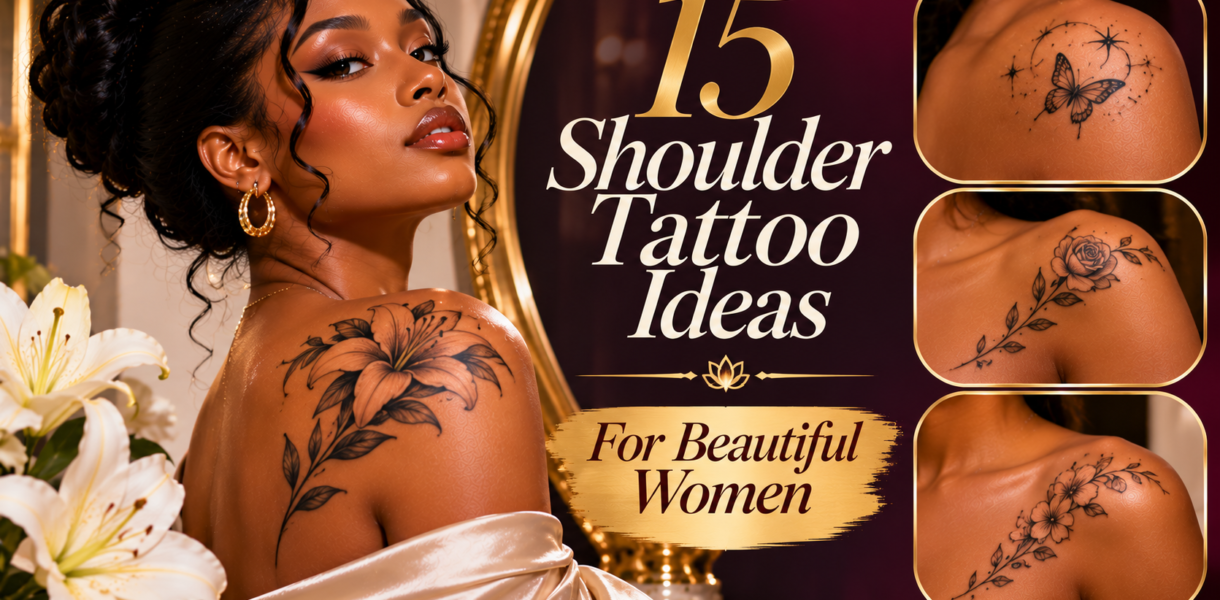
A fine-line rose on the shoulder cap can feel classic and delicate. Keep it as a clean outline for a light look, or add shading and leaves for more dimension. You might choose a rose to mark someone important or simply because you love its shape.
A wildflower sprig can curve from the top of the shoulder toward the collarbone. A slim outline keeps it understated, while a few added leaves create a fuller design. It could bring to mind a favorite place, a fresh start, or a personal connection to nature.
A botanical branch extending toward the shoulder blade gives the design more room to flow. Leaves can be arranged along the shoulder’s natural lines, with a simple outline or extra detail depending on your preference.

Try butterflies, birds, or another nature-inspired design
A pair of small butterflies angled across the back shoulder can suggest movement without needing a large design. You can keep both shapes simple or vary their size for a less symmetrical arrangement.
A hummingbird with a tiny flower combines a recognizable bird with a lighter botanical detail. It can sit on the outer shoulder or angle toward the collarbone, with the flower chosen for its look or personal meaning.
A crescent moon with delicate stars can fit along the shoulder’s curve. The shapes can be scaled up or down and arranged close together or spread out to suit the space.
Keep it simple with a symbol that matters to you
A small heart beneath the shoulder joint is a compact option with room for personal meaning. You could choose a plain outline or a slightly fuller shape, depending on the effect you want.
A fine-line sun can sit neatly on the shoulder cap. Its rays may be short and minimal or longer and more decorative. The image might remind you of warmth, optimism, or a moment you want to keep close.
A single word or short phrase can fit near the front or back of the shoulder. Choose lettering that stays clean and readable at the size you want; a simple font often gives a small tattoo more clarity.
Make a statement with ornamental and celestial art
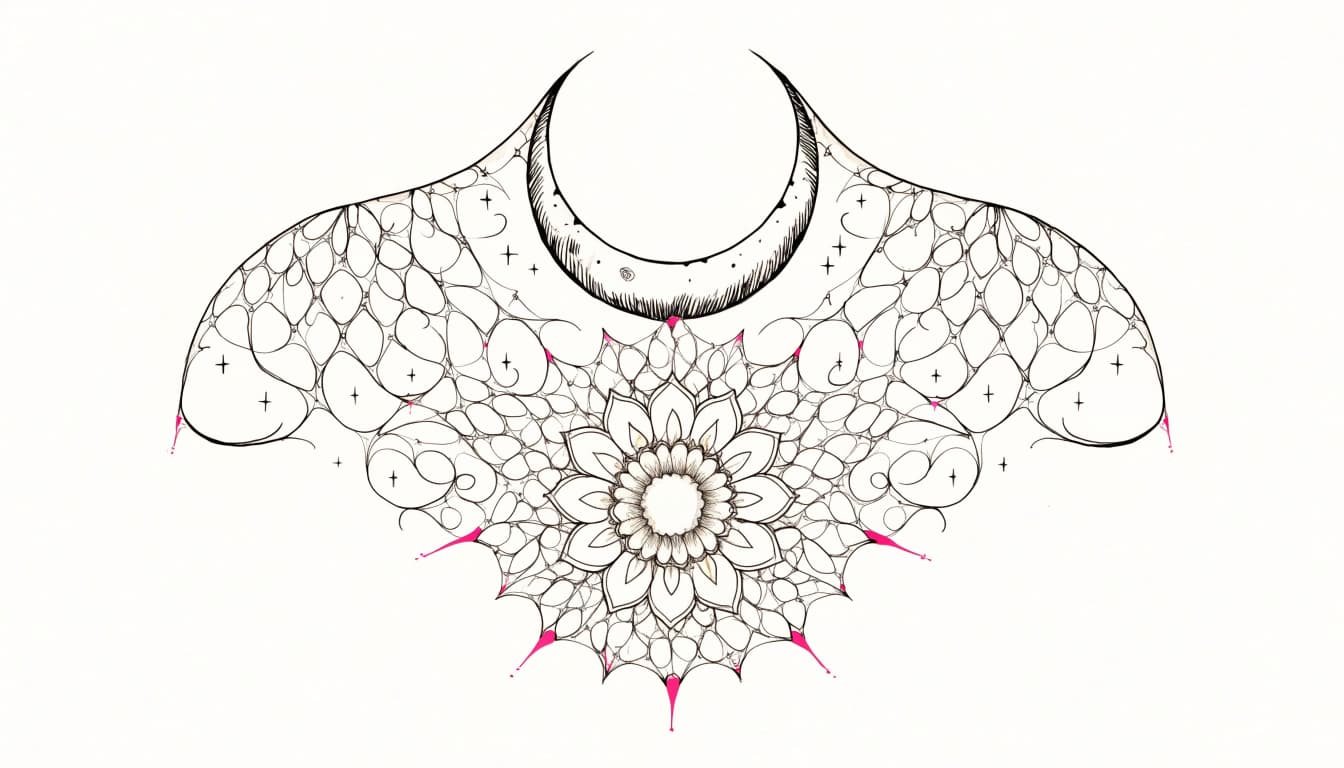
Lace-inspired ornamental linework can follow the rounded shape of the shoulder cap. Fine detail creates an elegant, decorative look, while open spaces keep the pattern from feeling crowded.
A sun-and-moon design spanning the shoulder and upper back can balance two contrasting shapes. You can keep the arrangement nearly symmetrical or let the forms curve naturally with your body.
A mandala centered on the shoulder cap draws attention to the shoulder’s rounded shape. Repeating details can create symmetry, while a simplified pattern leaves more breathing room.
Go bold with an animal or flowing floral piece
A dragon wrapping from the shoulder toward the upper arm can use the length of the area to create a sense of motion. The details might be fine and decorative or drawn with stronger lines, depending on your preferred style.
A butterfly with soft shading gives a familiar shape more depth than a small outline. Placing it on the outer shoulder or upper arm leaves room for the wings and shading to read clearly.
A larger botanical composition can layer flowers and leaves across the shoulder and upper back. Extra space can help preserve the separation between details, especially if you want multiple blooms or fine leaf patterns.
Find the shoulder placement and tattoo style that suit you
The shoulder offers several distinct placements. A tattoo on the cap can feel compact and rounded; a front-shoulder design near the collarbone is more visible with many necklines. The outer shoulder and upper arm allow a design to extend downward, while the shoulder blade gives a broader, flatter area.
Your clothing affects how often the tattoo shows. Sleeves may cover the outer shoulder or upper arm, while some tops leave the collarbone or shoulder cap exposed. The best spot is the one that fits the design’s shape, your preferred visibility, and the amount of detail you want.
Match your design size to the spot
Small symbols, simple flowers, and clean outlines can work well on the shoulder cap. Designs that extend toward the upper arm or back have more room for leaves, shading, and other details. The shoulder’s curve can also affect how a design looks from different angles.
Treat any suggested size as a starting point. Your body shape and the artist’s design can change the final dimensions, so ask to see the stencil placed on your shoulder before the session. A few size adjustments can help you decide whether the tattoo feels balanced.
Choose fine-line, bold, or shaded artwork with care
Fine-line work can suit delicate florals, small symbols, and ornamental patterns. Solid black shapes give a design more visual weight, while shading or color can add depth to flowers, animals, and larger pieces.
Look at healed examples of an artist’s work, especially if you’re considering tiny or highly detailed art. Ask how the design’s spacing and line weight may age, and whether any details should be simplified to keep the image readable over time.
Plan your shoulder tattoo, from comfort to aftercare
Before booking, talk with your tattoo artist about the design, its size, placement, and expected session length. Ask which aftercare steps they recommend for your tattoo. Your comfort and healing can vary, so plan around your own needs rather than relying on a fixed pain rating or timeline.
Know what may affect comfort and healing
Discomfort depends on the person and the precise spot. Areas close to bone may feel different from the fleshier outer shoulder, and a longer session or individual stress can affect the experience. Your artist can discuss the placement and session plan with you before you begin.
Follow your tattoo professional’s aftercare directions. The NHS recommends gentle washing with warm water and fragrance-free soap, patting the tattoo dry, and using the ointment recommended by your tattooist. Some early redness, swelling, soreness, itching, flaking, and clear fluid can occur. If the area becomes unusually hot, moist, or inflamed, or redness spreads or pain worsens, seek medical advice. The American Academy of Dermatology’s tattoo-care guidance lists warning signs that can need medical attention.
Plan around clothes, straps, and everyday movement
A shoulder tattoo can show with sleeveless tops and sit under some sleeves, depending on its exact position. While it heals, choose loose clothing when practical and reduce rubbing from bra straps, backpack straps, or sports gear, following your artist’s advice.
Think about how you usually dress and move during the day. A placement that works with your favorite tops and regular activities may be easier to live with than one chosen for the design alone.
Frequently Asked Questions
Does a shoulder tattoo hurt?
Pain is personal and can vary with the exact spot, session length, and your own comfort level. A shoulder-cap tattoo may feel different from one closer to the collarbone or shoulder blade, so a single pain score can’t predict your experience.
Which shoulder spot is easiest to cover?
The shoulder blade and areas under sleeves are often easier to cover than the collarbone or outer shoulder. Coverage still depends on the cut and fit of your clothing, including how high a neckline sits and how much a sleeve covers.
How big should your shoulder tattoo be?
Choose a size that suits the design’s detail and the area where you want it placed. Ask your artist to test the stencil at different sizes so you can see how the shape and fine details look on your shoulder.
Will a small, detailed tattoo stay clear?
Very small details can be harder to distinguish over time, especially when lines and shapes sit close together. A readable design with enough spacing can help; discuss the line weight and expected healed appearance with your artist.
How long does a shoulder tattoo take to heal?
Healing varies by tattoo and person, and visible surface healing isn’t the same as deeper recovery. Healthline notes that the outer layer typically heals in two to three weeks, while deeper skin may take longer; follow your artist’s aftercare instructions rather than treating that estimate as a fixed timeline.
Conclusion
The best shoulder tattoo is one that suits your taste, feels comfortable in its placement, and has the visibility you want. Save a few ideas, then discuss their shape and scale with a skilled tattoo artist.
A thoughtful design doesn’t need a fixed meaning. Choose something you’ll enjoy wearing, whether it’s a small symbol or a larger piece that follows your shoulder’s curve.

- 15 Butterfly Tattoo Designs For Elegant and Classy Women - November 6, 2026
- 15 Classy Floral Tattoo Ideas That Look Elegant And Timeless - November 6, 2026
- 15 Shoulder Tattoo Ideas For Beautiful Women - November 6, 2026