
 Gloryshines Chidinma
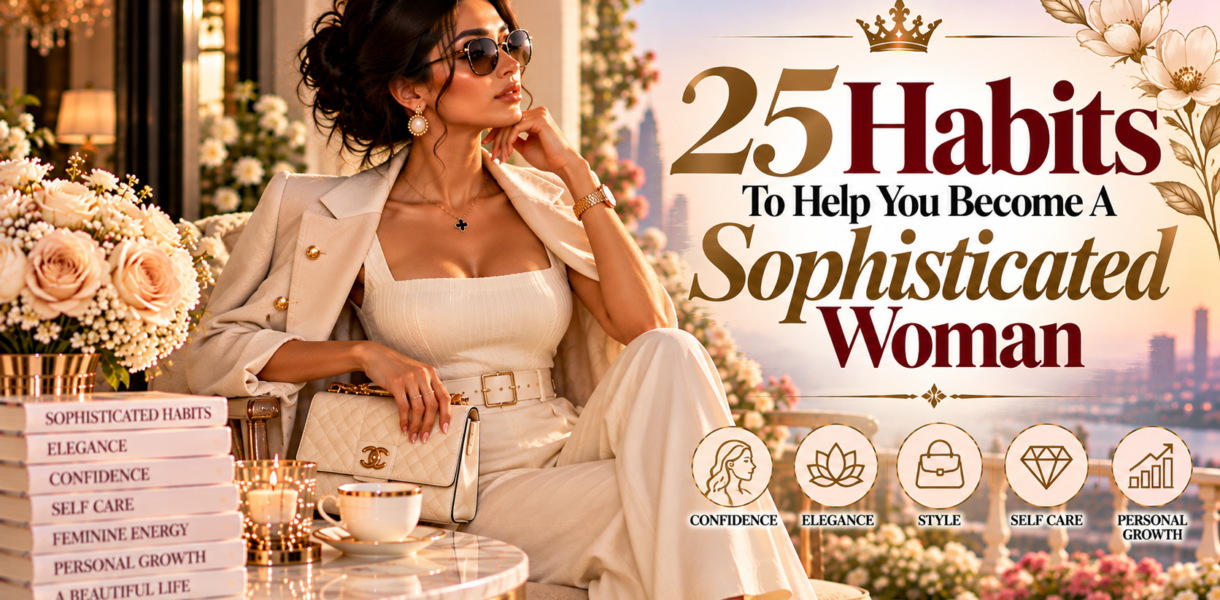
Becoming elegant and sophisticated is about how you treat yourself and others, not your wealth, a strict dress code, or fitting one narrow idea of womanhood. The art of becoming an elegant, sophisticated woman begins with everyday choices that show consideration, self-respect, and confidence.
If you’re looking for practical self-improvement, these 25 habits can fit your values, culture, budget, and daily life. Your personal style is part of that picture, too, and can be as distinctive as you are; explore how to create an elegant fall wardrobe for inspiration. Let’s start with what sophistication means in practice.
The Art of Becoming an Elegant and Sophisticated Woman Begins Within
The first five habits build self-respect and support personal growth. Sophistication develops through small, repeatable choices, not a perfect image or a need to impress everyone around you. These foundations help you feel more capable and make your confidence easier to carry into everyday life.
Build self-trust through preparation and honest self-awareness
Keep reasonable promises to yourself and others. If you tell a friend you’ll call after work, make time for the call or let her know plans have changed. Set goals you can follow through on, too. A small promise kept regularly builds more trust than an ambitious plan you rarely have time to complete.
Prepare for commitments, conversations, and work so you can give them your attention. Before a meeting, review the agenda and note what you need to ask or share. For an important conversation, consider the point you want to communicate and make room to hear the other person’s perspective. Preparation doesn’t require a perfect script; it gives you a steadier starting point.
Be honest when you don’t know something. Pretending may feel impressive for a moment, but a clear question helps you learn and keeps expectations realistic. You might say, “Could you explain what you mean by that?” or “I haven’t worked with this before. What should I know?” Competence and humility make a stronger impression than pretending to have every answer.
Let curiosity and reflection guide your growth
Keep learning about subjects that matter to you. Read a few pages of a book, follow a topic that interests you, or ask thoughtful questions when someone shares an experience. Curiosity adds substance to conversation and helps you form opinions based on more than first impressions. For self-improvement for women, learning can be personal and practical, shaped by your interests rather than someone else’s timeline.
Make space to reflect on your choices without shaming yourself for mistakes. At the end of the week, consider what went well, what felt difficult, and what you want to try differently next time. If a conversation didn’t go as planned, think about what you heard, what you assumed, and what you could ask more clearly. This kind of reflection helps you make adjustments without turning one mistake into a judgment about your character.
You don’t need to change everything at once. Choose one habit to practice this week, then notice what makes it easier to keep.
Practice Confident Communication and Context-Aware Etiquette
Your communication habits shape how others experience your warmth, confidence, and respect. Listening carefully, speaking clearly, and adjusting your manners to the situation help you connect without hiding your own needs or opinions.
Listen closely, ask clearly, and speak with purpose
Habit 6: Listen without interrupting. Give the other person time to finish, even when you already know what you want to say. Put aside distractions and pay attention to their words and pauses. If you’re unsure you understood, briefly restate the main point and check: “So the deadline changed after the handover. Is that right?” This shows attention without assuming you know exactly what they mean.
Habit 7: Ask clarifying questions. When a request or comment feels unclear, ask for the detail you need instead of guessing. You might say, “When you say this is urgent, do you need it today?” A thoughtful question can prevent confusion and help both of you agree on what happens next.
Habit 8: Speak audibly and directly. Share your ideas and needs in a clear, measured way. You can be considerate without apologizing for every opinion or making yourself smaller. For example, try, “I have a different suggestion. Could we consider moving the meeting to Thursday?” Directness gives others something clear to respond to, while your tone keeps the conversation respectful.
Show respect while keeping your own voice
Habit 9: Greet people and use their preferred names or titles. A warm greeting helps set a considerate tone. In a formal or professional setting, use the name or title that seems appropriate, then follow the person’s lead. If you’re unsure, ask, “What would you like me to call you?” Using someone’s preference matters more than assuming one form of address suits everyone.
Habit 10: Adapt your manners to the people and setting. Etiquette can vary with culture, age, relationship, and setting. A greeting, level of formality, or conversational style that feels natural among friends may not fit a workplace meeting or someone else’s family gathering. Pay attention, ask when you’re uncertain, and avoid treating one custom as a universal rule. Courtesy comes from noticing what helps others feel respected.
Habit 11: Disagree with reasons, not insults. You can hold your view while recognizing that someone else may see the issue differently. For example: “I understand why you prefer that option. I see one concern, though: the delivery date depends on approval. Could we check the timeline together?” The focus stays on the decision and the reason for your concern, not on criticizing the person.
Create a Polished Personal Style That Feels Like You
Your style can look polished without following a strict dress code or spending heavily. Fit, comfort, care, and choices that suit your daily life help you feel prepared and still express your personality.
Dress with intention, fit, and care
Habit 12: Choose clothes that suit the occasion and your routine. Consider where you’re going, what you’ll be doing, and the weather. A neat outfit with comfortable shoes and a layer for a cool day often works better than a look that feels out of place or impractical. For seasonal ideas, browse these fall fashion trends for 2026, then adapt what suits your own wardrobe.
Habit 13: Prioritize fit and comfort over labels. Clothes that sit well at the shoulders, fall neatly at the hem, and let you move comfortably can look considered at any price. If a piece is close to fitting well, a simple alteration may help. A burgundy bag, plaid scarf, or textured jacket can add personality; one distinctive accent is often enough to keep an outfit composed.
Habit 14: Take care of what you own. Check garment care instructions, mend loose seams, remove lint, and store clothes so they’re ready to wear. Keep shoes clean and maintained, too. Before buying something new, look through your closet and try fresh combinations with the pieces you already have. A focused shopping list helps you fill genuine gaps instead of buying on impulse.
Make grooming and self-care personal and sustainable
Habit 15: Maintain personal hygiene in a way that works for you. Regular washing, clean clothes, and basic nail care can help you feel comfortable and ready for the day. Your needs and routines may differ, so choose practical habits you can maintain.
Habit 16: Make grooming choices that fit your preferences, health, and budget. You might prefer a simple hairstyle, use makeup occasionally, or skip it altogether. Choose routines that feel manageable and suit your circumstances. Makeup, a particular hairstyle, or costly products aren’t requirements for looking polished.
Habit 17: Make time for rest and basic well-being. Sleep, meals, and moments to pause can affect how you feel and carry yourself during the day. You don’t need an elaborate routine; small, consistent choices can make daily responsibilities easier to manage.
Habit 18: Match your presentation to the day, not an ideal of perfection. A workday, a relaxed afternoon, and a special event may call for different choices. Aim for clean, comfortable, appropriate presentation, then move on with your day. Sophistication leaves room for real life.
Set Boundaries and Make Thoughtful Choices Online and With Money
Emotional maturity includes caring for your needs while treating other people with respect. These final habits help you protect your time, make steady choices with money, and use social media with care.
Protect your time and handle conflict with care
Habit 19: Set clear limits on your time and energy. You can be generous without agreeing to every request, including when family responsibilities or work already fill your schedule. A respectful limit lets others know what you can manage and gives you room to follow through.
Habit 20: Say no kindly when you can’t take something on. You don’t need to give a long explanation or apologize repeatedly. If you can offer a smaller form of help, be clear about it: “I can’t take that on this week, but I can help you review it for 20 minutes on Friday.” If you can’t offer an alternative, a simple, considerate no is enough.
Habit 21: Pause before responding in conflict. Take a moment to understand what was said and decide what you want to communicate. If you realize you misunderstood someone or spoke too sharply, acknowledge it and try again. A sincere repair can sound like, “I reacted before I understood. I’m sorry. Can we talk about what you meant?”
Use money and social media with intention
Habit 22: Track your spending and match purchases to your priorities. A simple list or budgeting app can show where your money goes and help you plan for regular expenses, savings, and the things you enjoy. Before buying something, check whether it fits your plan. Caring for clothes you already own and planning purchases around actual needs can reduce impulse spending.
Habit 23: Don’t spend beyond your means to signal status. A polished appearance doesn’t depend on expensive labels or constant new purchases. Choose items that suit your life and budget, and avoid taking on spending that crowds out your priorities just to impress other people. Confidence comes through in how you carry yourself, not the price tag.
Habit 24: Protect personal and financial details online. Limit what you share publicly, review privacy settings, and avoid accessing financial accounts over public Wi-Fi. Use a unique password for each account and enable two-factor authentication where available. The Nigerian Communications Commission also recommends strong, unique passwords and multi-factor authentication to help protect online accounts.
Habit 25: Check information before sharing it. Pause when a post feels shocking or urgent. Look for the original source, check the date, and compare the claim with reliable reporting before you pass it along. You can take part in online conversations without sharing every post that catches your attention.
Frequently Asked Questions
Sophistication develops through everyday choices, and it can fit your personality, budget, and circumstances. These answers offer a few practical ways to approach it.
Can you become more sophisticated without spending much?
Yes. Focus on caring for what you own, choosing clothes that fit and suit your routine, and treating people with consideration. Thoughtful choices and consistent care often make a stronger impression than costly purchases.
Does being elegant mean you must be quiet or reserved?
No. You can be confident, expressive, and direct while remaining respectful. Elegance comes through in how you communicate, including giving others room to speak and sharing your views without belittling theirs.
How can you practice better manners in a new setting?
Take a moment to observe how people greet and address one another, since customs vary by setting and culture. If you’re unsure, ask politely or follow the preferences of the people involved rather than assuming one set of rules applies everywhere.
How do you begin changing habits when you feel overwhelmed?
Choose one small, realistic habit, such as preparing your clothes the night before or listening without interrupting. Practice it consistently before adding another, so your changes feel manageable and easier to maintain.
Can personal style still be elegant when it is casual?
Yes. Casual clothes can look intentional when they’re comfortable, cared for, and suited to the occasion. Clean shoes, neat hems, and a balanced outfit can make familiar basics feel polished.
Conclusion
The art of becoming an elegant and sophisticated woman is shaped by the choices you make each day: how you treat others, care for yourself, and express your personal style. These 25 habits are options to practice, not rules you need to follow perfectly.
Choose one habit to try this week, then build at a pace that feels manageable. Your version of sophistication can be polished, casual, bold, or entirely your own, grounded in your values and personality.

- 15 Butterfly Tattoo Designs For Elegant and Classy Women - November 6, 2026
- 15 Classy Floral Tattoo Ideas That Look Elegant And Timeless - November 6, 2026
- 15 Shoulder Tattoo Ideas For Beautiful Women - November 6, 2026